Three data center ordinances are up for final votes at the Memphis City Council on Tuesday. Members will also decide how to spend $3.26 million in data center tax money.
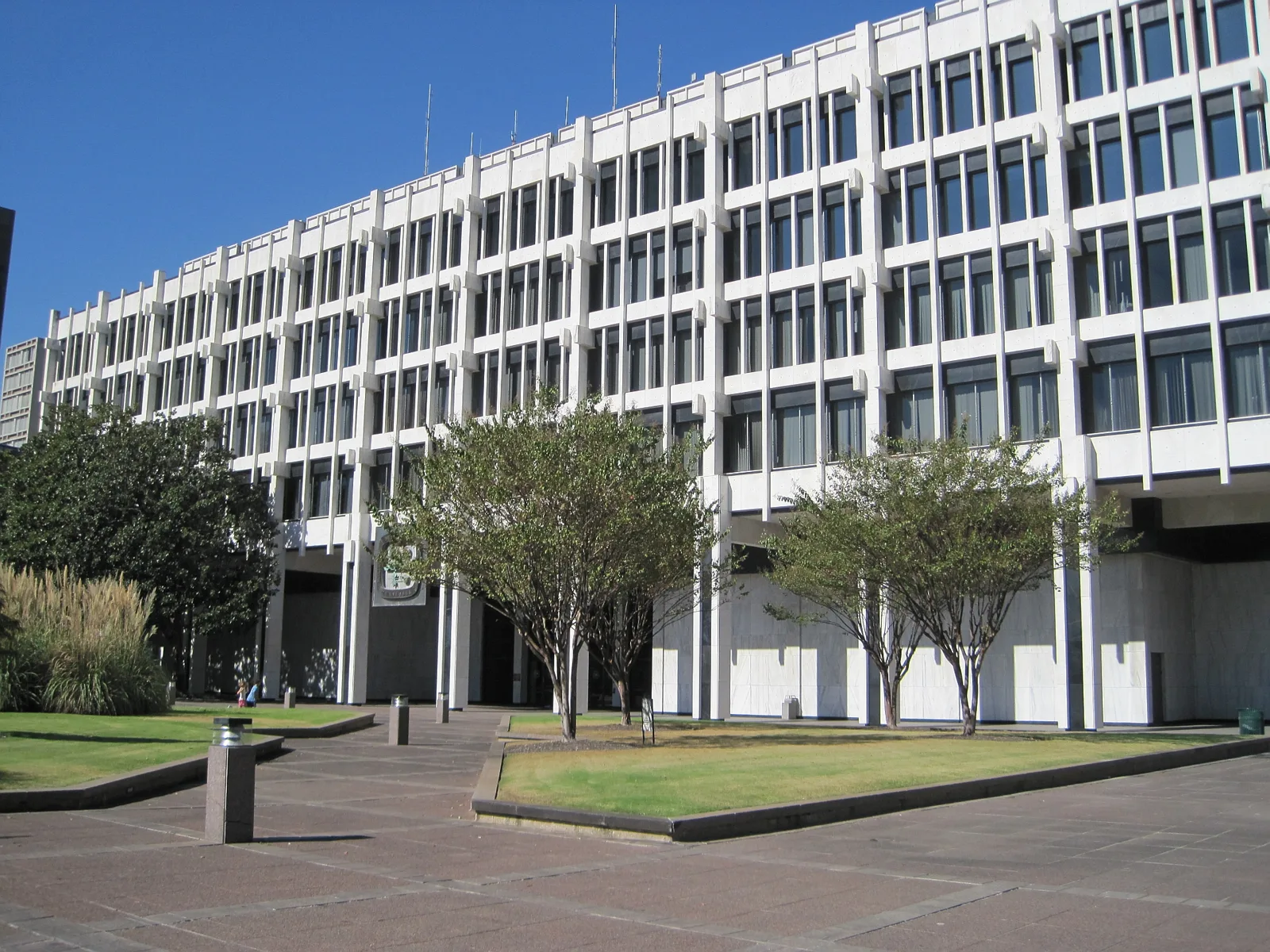
The Memphis City Council takes final votes Tuesday on three competing sets of rules for data centers. The meeting starts at 4 p.m. in the Council Chambers on the lobby floor of City Hall, 125 N. Main St.
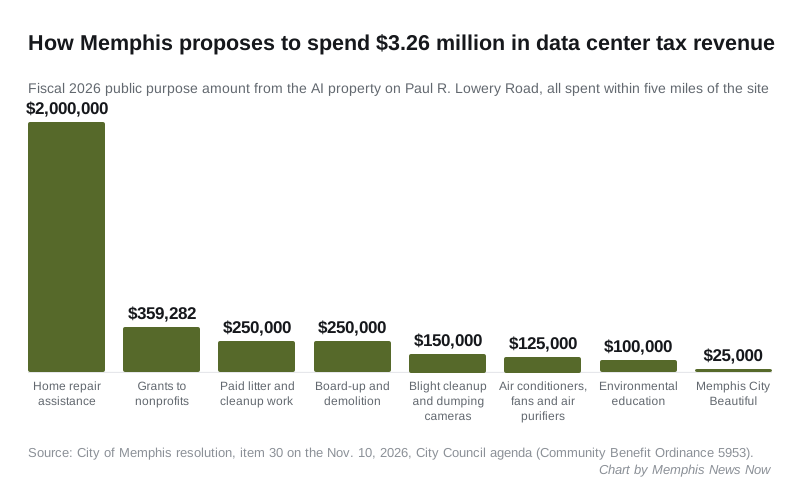
The same agenda asks the council to spend $3,259,282 in property tax money from the data center property on Paul R. Lowery Road. All of it would go to projects within five miles of the site.
The items are on the council’s agenda for Nov. 10. The full texts are in the regular agenda documents, both posted on the council’s agendas and minutes page.
The three data center ordinances
All three are up for third and final reading. The agenda lists each as “take whatever action Council deems advisable.”
| Ordinance | What it does | Sponsors |
|---|---|---|
| No. 5987 | Adds data center zoning rules to the Unified Development Code | Jeff Warren, Ford Canale, Philip Spinosa, Chase Carlisle and Janika White |
| No. 5988 | Sets a land-use and siting framework for data centers and other “resource-intensive uses” | Rhonda Logan, Yolanda Cooper-Sutton, Jana Swearengen-Washington, Pearl Eva Walker and Jeff Warren |
| No. 5985 | Replaces a “blanket data-center moratorium” with tiered review and a new data center district | Philip Spinosa |
Ordinance 5987. The version posted with the council’s October papers creates data center industrial zoning districts. In its “DC Light Industrial” district, all work must happen inside enclosed buildings. Self-supplied, behind-the-meter or stand-alone power plants are banned there. The ordinance says the council must receive a recommendation from the Land Use Control Board before final adoption.
Ordinance 5985. This is the longest of the three. Under it:
- a “covered facility” is a data center needing 10 megawatts or more, counting all of its power sources, not only what it buys from Memphis Light, Gas and Water
- projects are sorted into three tiers: 10 to 25 megawatts, 25 to 50 megawatts and 50 megawatts or more
- the two larger tiers could not use drinking water for routine cooling after a commissioning period of up to 90 days
- a new direct well into the Memphis Sand aquifer for cooling would need every state and county permit plus a two-thirds council vote after a public hearing
- any city tax break could not cut the city’s payment on a center’s computer equipment below 100% of the normal property tax
- the city could set up “Memphis Digital Infrastructure Development District No. 1”
Ordinance 5985 has been held twice already, on Oct. 6 and Oct. 20. Its text says the moratorium would end only at the moment the new rules take effect, so there is “no interval” without one or the other.
The council also has a resolution from Cooper-Sutton listing standards the council wants for data centers. They include developers paying for new power, water and road work, residential buffers, noise limits and decommissioning obligations. It has been held since Oct. 6.
Where the $3.26 million would go
Under Community Benefit Ordinance 5953, passed Aug. 19, 2025, the city sets aside 25% of the property taxes it collects on AI properties. The money must be spent within five miles of the property.
For fiscal 2026 that came to $3,259,282, all from the property on Paul R. Lowery Road. The city calls the five-mile area “Investment Zone 1.” The resolution is listed for District 6 and Super District 8 and is sponsored by the administration.
The administration’s split, which it said drew on residents’ input and the council’s advisory committee:
- $2,000,000 for home repairs, including critical repairs, weatherization and accessibility work
- $359,282 in grants to nonprofits, at least $50,000 of it for health care groups
- $250,000 for paid litter removal and neighborhood cleanup jobs
- $250,000 to board up and demolish homes and commercial buildings
- $150,000 for blight work, including trash cans at high-litter spots and cameras at illegal dumping sites
- $125,000 for window air conditioners, box fans, HVAC filters and air purifiers for residents
- $100,000 for environmental education
- $25,000 for Memphis City Beautiful volunteer cleanups
The resolution says the money must add to city services in the zone, not replace what the city already spends there.
Also on Tuesday’s agenda
- Data center benefit agency. Ordinance 5989, from Warren, is up for second reading. It would set up a nonprofit Memphis Community Benefit Agency to take in and hand out data center community-benefit money.
- Mid-South Coliseum. A Cooper-Sutton resolution backs predevelopment planning by the Mid-South Coliseum Conservancy and asks the mayor’s office to draft terms by Nov. 30. It spends no money.
- Blight ordinance. Ordinance 5950 on blight cleanup is up for final reading again. It has been held 10 times.
- Libraries. A $430,500 state grant for Memphis Public Libraries and an agreement with Shelby County to run the East Shelby Branch Library.
- Senior centers. State grants of $40,000 for the Hickory Hill Community Center and $50,000 each for the J.K. Lewis and Frayser Raleigh senior centers.
- Street name. Ikea Way would become Cordova Market Drive between North Germantown Parkway and Market Farms Drive.
What it means for you
- To speak: the agenda ends with public comment. Fill in an appearance card at the meeting.
- If you live near the Paul R. Lowery Road site: the home repair money is the biggest piece. The resolution does not yet say how to apply, so watch for the city’s program details.
- If you follow the data center fight: the three ordinances take different routes. One sets zoning districts, one a siting framework, and one replaces the pause with tiered review. The council could pass, amend, hold or reject each.
We will update this page with the council’s votes. For permits and rezonings near you, see our building permits and zoning page. For how city property taxes work, see our property taxes page.
Have your say